Mount Sinai & St Catherine Package: 2 Days from Cairo (2 Days / 1 Night): From $150 · per adult.
Why St. Catherine & Mount Sinai Belong on Every Egypt Itinerary
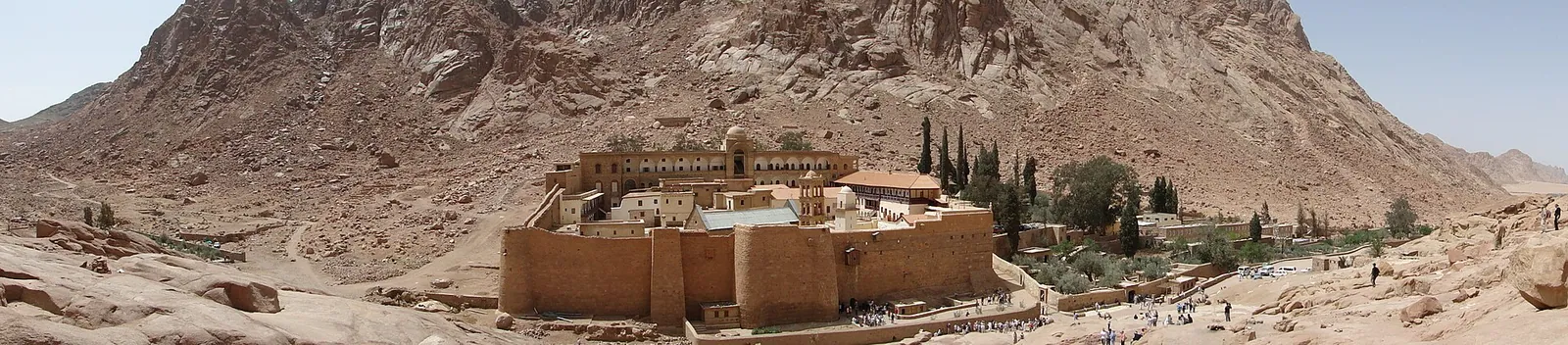
Few destinations on earth carry the weight of southern Sinai. Perched at the foot of the mountain where Moses is believed to have received the Ten Commandments, St. Catherine’s Monastery has been continuously inhabited since the sixth century, making it one of the oldest working Christian monasteries in the world. Rising behind it, the dark granite peak of Mount Sinai (known locally as Gebel Musa, or “Mountain of Moses”) draws hikers, pilgrims, and curious travellers alike, all eager to watch dawn break over one of the most spiritually charged landscapes in the Middle East.
What makes a visit genuinely remarkable is the combination of history, spirituality, and physical adventure. In a single overnight trip you can wander a UNESCO-listed monastery filled with priceless Byzantine icons, climb a sacred mountain by torchlight, and stand at 2,285 metres above sea level as the Sinai peaks glow amber and rose at sunrise. It is, by almost any measure, one of Egypt’s most extraordinary experiences, and one that Ahmose Travel regularly helps visitors plan from Cairo, Hurghada, and Sharm El-Sheikh.
This St. Catherine Monastery and Mount Sinai hike guide covers everything you need for 2026: how to get there, what to see inside the monastery, which summit route suits you best, how to prepare for cold Sinai nights, and where to rest before the climb.
Getting There: Cairo, Sharm El-Sheikh, and Your Options
Most international visitors reach St. Catherine either overland from Cairo or on an excursion from the Red Sea resorts. Neither route is complicated, but the journey times are long enough that a genuine overnight stay is far preferable to a rushed single-day turnaround.
From Cairo: The classic approach is a private transfer or overnight coach heading south-east through the Eastern Desert, crossing the Suez Canal, and continuing into southern Sinai. Private vehicle journey times run roughly six to seven hours. Most travellers depart in the afternoon, arrive near midnight, rest briefly, and begin the pre-dawn hike in the small hours. Ahmose Travel’s transfer and transport services can arrange door-to-door private vehicles from any Cairo hotel.
From Sharm El-Sheikh: Sharm sits roughly three to four hours by road from St. Catherine. Overnight excursions from the resort (departing early evening, hiking at dawn, visiting the monastery before returning) make far better use of the time than a cramped day trip that barely allows you inside the gate.
| Journey | Approximate Travel Time | Recommended Approach |
|---|---|---|
| Cairo to St. Catherine | 6–7 hours by road | Depart afternoon; arrive midnight; hike pre-dawn |
| Sharm El-Sheikh to St. Catherine | 3–4 hours by road | Evening departure; overnight hike; morning monastery visit |
| Dahab to St. Catherine | Approx. 1.5–2 hours by road | Closest base; ideal for independent and budget travellers |
| Hurghada to St. Catherine | Half-day via ferry + road | Combine with a Red Sea stay; book transport well in advance |
St. Catherine’s Monastery, What You’ll Actually Find Inside
Founded by the Byzantine Emperor Justinian I around 565 AD and continuously inhabited by Greek Orthodox monks ever since, St. Catherine’s Monastery is a living institution rather than a museum ruin. The monks still pray, study, and tend the grounds; which means visitor access follows their schedule. The monastery typically opens to non-worshippers for a limited morning window on weekdays and selected Saturdays, but it is closed on Sundays and Greek Orthodox feast days. Always confirm current opening times when booking, as these can shift seasonally or at short notice.
What awaits inside is extraordinary. The Burning Bush: still growing in the monastery courtyard, is identified by Christian, Jewish, and Islamic tradition as the very thorn bush from which God spoke to Moses, and its presence within these ancient walls carries undeniable power. The Basilica of the Transfiguration houses one of the finest early Christian mosaic programmes in existence: the sixth-century apse mosaic of the Transfiguration is considered a masterwork of Byzantine art that scholars travel from around the world to study. The monastery’s library, meanwhile, holds thousands of ancient manuscripts and is the second-largest repository of early Christian texts in the world after the Vatican, a staggering legacy concealed behind those modest stone walls.
Both men and women must cover shoulders and knees to enter St. Catherine’s Monastery. Cover-ups are occasionally available at the gate, but it is far better to arrive dressed appropriately from the outset. Respectful silence is expected inside the basilica. Photography is restricted or entirely prohibited in certain areas, always check with the monks on duty before raising your camera, and never assume permission.
The Mount Sinai Hike: Two Routes, Two Very Different Experiences
Two main trails lead to the summit of Mount Sinai, and understanding the difference between them will shape your entire experience of the mountain.
| Route | Character & Distance | Best For |
|---|---|---|
| Camel Trail (Siket el-Bashait) | Approx. 7–8 km; gradual gradient; camels available for the lower sections | First-timers, mixed-ability groups, those wanting a steadier night ascent |
| Steps of Repentance (Siket Sayidna Musa) | Approx. 3,750 carved stone steps; steep and direct; no camel access | Fit hikers seeking the historic pilgrim route; harder on knees on descent |
The Camel Trail is the most popular choice for the night ascent: the gradient is kinder on tired legs in the dark, camels can carry you for the lower portion (typically up to where the terrain becomes too rocky), and the path is well-worn and easy to follow by torchlight. The Steps of Repentance, carved by monks over many centuries as a path of penance, converge with the Camel Trail near the summit, so most visitors ascend via the Camel Trail and descend via the Steps, or reverse the order. Whichever combination you choose, the final 750 steps to the summit chapel must always be completed on foot.
A local Bedouin guide is mandatory at the trailhead and genuinely invaluable. These guides know the mountain well in all weathers, keep you on pace for sunrise, and bring cultural context that no printed guide can replicate.
The Night Hike: Timing, Cold, and the Sunrise at the Summit
The standard plan is to begin climbing around midnight or 1:00 am, aiming to reach the 2,285-metre summit approximately ninety minutes before local sunrise. In 2026, sunrise times at the summit range from around 5:50 am at the height of summer to closer to 7:00 am in winter; your Bedouin guide will advise the precise starting time based on the season and your group’s pace.
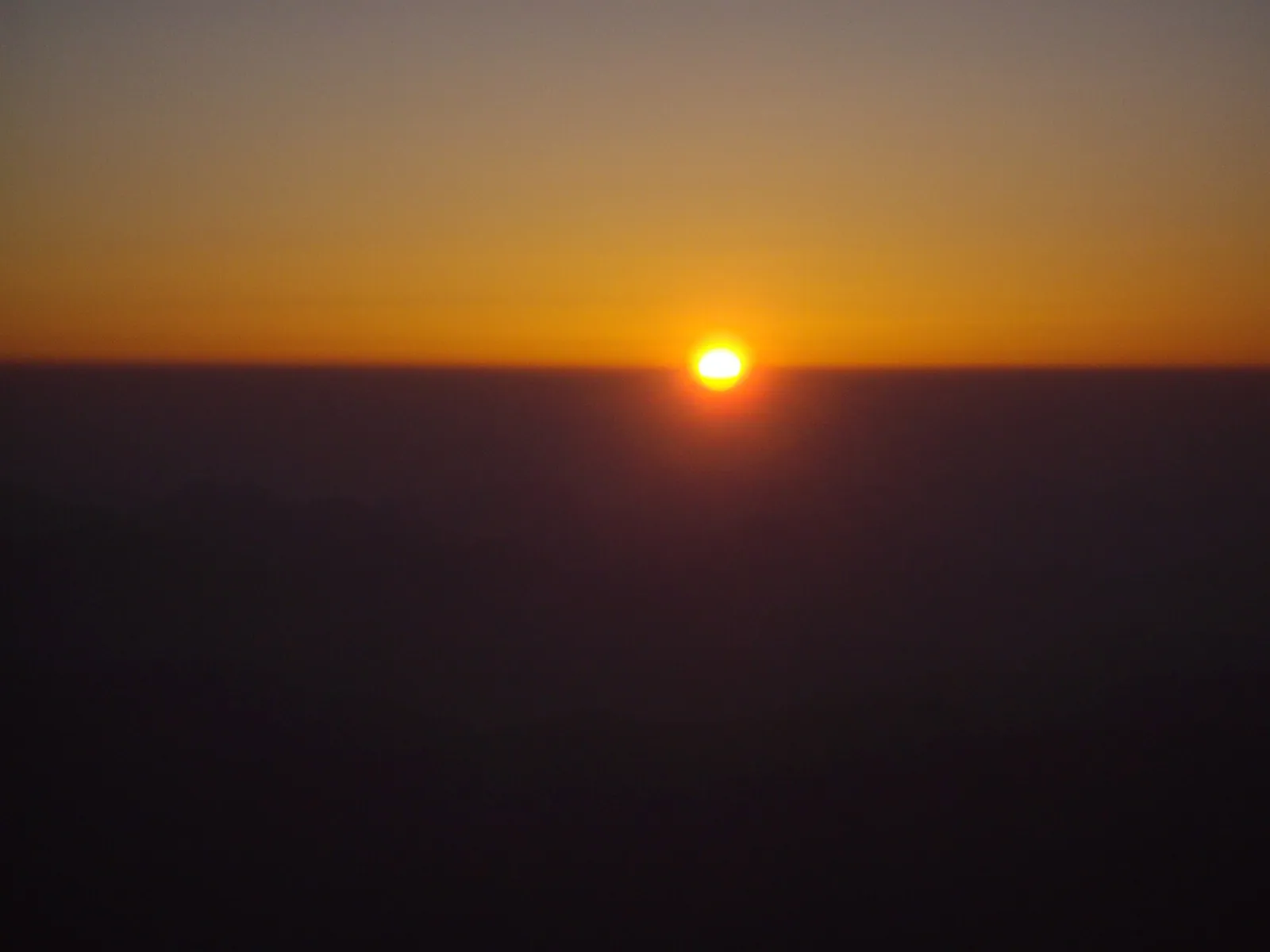
The ascent in darkness carries a quality that no daytime hike can replicate. Strings of torchlight trail up the mountain as fellow climbers make their way in near-silence, and the sky above southern Sinai (far from any meaningful light pollution) fills with an extraordinary density of stars. By the time you reach the small stone chapel near the summit, you will likely be sharing the space with dozens of others; at peak periods, hundreds. Yet the moment the first light floods the ancient valley below and the jagged granite ridges begin to glow amber and violet, silence tends to fall naturally over the crowd. It is one of those rare travel experiences that genuinely lives up to its reputation.
The cold, however, is not to be taken lightly. Even in July and August, temperatures at the summit drop sharply overnight, and wind chill at 2,285 metres amplifies this significantly. In the winter months (November through March) sub-zero temperatures at the summit are entirely normal. Hikers who arrive underprepared invariably end up renting blankets from the Bedouin vendors at the trail huts near the top, which is a valid option but a poor substitute for proper preparation.
Pack a fleece or insulated jacket, a windproof outer layer, gloves, and a warm hat, regardless of how warm the valley feels the afternoon before. A head torch with fresh batteries is essential and far superior to relying on a phone screen for a two-hour night ascent. Bring at least a litre of water and a small snack; basic refreshments and hot tea are sold at trail huts, but prices reflect the altitude and the effort of getting supplies up there.
Ready to Climb Mount Sinai? Let Ahmose Travel Handle the Details
From private overnight transfers to expert Bedouin guides and handpicked accommodation near the monastery, our Sinai packages take care of every element so you can focus entirely on the experience.
Practical Essentials and Visiting Rules
A few practical points that make the difference between a smooth visit and an avoidable headache:
- A full Egyptian visa is required. St. Catherine lies outside Sinai’s coastal free zone. The limited Sinai-only entry permit issued at Sharm El-Sheikh airport does not cover this area; visitors arriving directly from a Red Sea resort on a Sinai-only permit will be turned away at the checkpoint. Confirm that you hold a full Egyptian visa before travelling.
- Cash is essential. Bring Egyptian pounds for the monastery entrance fee, Bedouin guide tips, camel hire, and any purchases at the trail huts. Cards are not reliably accepted outside the main hotels in the village.
- Photography rules vary. Inside the basilica, photography is limited and in some sections entirely prohibited. In the monastery courtyard and grounds, it is generally permitted, but always ask the monks before raising your camera.
- Trekking poles are a worthwhile investment if you plan to descend via the Steps of Repentance, which are demanding on the knees after a long night on the mountain.
- Mobile connectivity in the St. Catherine area is limited. Download offline maps and save your hotel address and phone number before leaving your last major city.
- Arrive early at the monastery. The morning opening window is short, and the most serene experience is always in the first hour. Arriving near closing time risks a rushed visit or being turned away entirely.
The wider St. Catherine area rewards those with a little extra time. The surrounding Sinai highlands include Coloured Canyon, ancient Bedouin villages, and high-altitude plateaux that see very few visitors. For more on planning your Sinai visit, see our St. Catherine tours page for current packages and departure options.
Where to Stay Near the Monastery
St. Catherine village (also known as Al-Milga), a few kilometres from the monastery gates, has a small but adequate range of accommodation: simple stone guesthouses, eco-lodges that blend naturally into the landscape, and a handful of comfortable mid-range hotels. Prices are modest by Egyptian resort standards, and the atmosphere (quiet, cool, and entirely removed from the bustle of Cairo or the beach resorts) is a genuine pleasure after the hike.
For most visitors, one overnight stay hits the mark: arrive in the evening, climb at night, visit the monastery in the morning, depart after lunch. Those with a second day can explore the surrounding desert by jeep or on foot. To build St. Catherine into a broader Egypt adventure, the Ahmose Travel team can combine it with Cairo’s pyramids and Egyptian Museum, a Nile cruise from Luxor to Aswan, or a Red Sea extension, all arranged as one logically ordered, unhurried itinerary.
Mount Sinai & St Catherine Package: 2 Days from Cairo
From $150 · per adult. Real local operator in Alexandria, message us with your dates and group size for an exact quote.
- Mount Sinai Sunrise Hike from Sharm El Sheikh: Adults from $75
- Discover Egypt: 11 Days All-Inclusive: Adults from $1725
Frequently Asked Questions
The Camel Trail is manageable for most reasonably active adults. The ascent takes roughly two to two and a half hours at a steady pace, and camels can carry you for the lower portion if needed. The final 750 steps to the summit are always on foot. Descending via the Steps of Repentance is harder on the knees, trekking poles help considerably. Those with significant joint concerns should plan to use camels for as much of the ascent as possible and take the Camel Trail on the way down as well.
No. The monastery is closed on Sundays and on Greek Orthodox feast days, of which there are many spread throughout the year. It typically opens to non-worshipping visitors on weekday mornings for a limited window (usually around 9:00 am to noon) though these hours can change without much notice. Always confirm current opening times with your tour operator before finalising your itinerary, as arriving to find the gates closed is a frustrating and costly mistake.
Spring (March to May) and autumn (September to November) offer the most comfortable conditions, mild valley temperatures, manageable summit cold, and stable weather. Summer brings warm days below but still very cold summit nights, along with the busiest domestic tourist season. Winter (December to February) is the most atmospheric time to hike: crisp dark nights, extraordinary stargazing, and occasional snow near the peak, but temperatures at 2,285 metres can fall well below zero, so serious cold-weather kit is non-negotiable.
Technically it is possible as an overnight excursion, depart Cairo in the afternoon, drive through the night, hike to the summit, visit the monastery in the morning, and return the following evening. However, this schedule is relentlessly tiring and leaves almost no margin if anything runs over. A far more comfortable approach is to spend one night in St. Catherine village, which allows you to arrive rested, hike at the right hour for sunrise, and visit the monastery during its full morning opening without feeling rushed.