- Seven days covers Cairo, Luxor, and Aswan if you move fast; but every traveller we’ve spoken to who did seven wishes they had booked ten.
- Ten days is the sweet spot for a first visit: you see the essentials at a human pace and still have room for Abu Simbel or an extra Luxor morning.
- October to April is the most comfortable season for the ancient sites; July and August are manageable but inland temperatures regularly reach 38–44 °C. As of 2026, check current e-visa requirements before you book; most nationalities apply online.
- Entry fees, tips, and optional extras typically add $80–$150 per person on top of a tour package price; budget for this from the start.
- Ahmose Travel’s Classic Egypt 10 Days Tour covers the full main circuit from $1,550 per adult (children 6–12 from $895, children 2–5 from $395).
Classic Egypt: 10 Days Tour (10 days): Adults from $1550 · Children (6-12): $895 | Children (2-5): $395.
How Many Days Do You Actually Need in Egypt?
Ten days is the realistic minimum to see Egypt’s main highlights without feeling you’ve sprinted through one of the world’s most extraordinary countries, seven works, but only if your itinerary is pre-planned to the hour and you accept that certain things simply won’t fit. The distances are real: Luxor is 670 km south of Cairo, and even with a domestic flight, each major site rewards more time than a single rushed morning gives it.
The good news is that a well-structured package removes the logistics entirely. Our Classic Egypt 10 Days Tour, from $1,550 per adult; is designed around exactly this balance: enough days at each destination to feel the place rather than simply photograph it. Check the full itinerary on the tour page to see how the days break down.
The drive from Cairo Airport to the city centre looks like 20 km on paper. In morning or evening traffic it regularly takes 50–75 minutes. Factor this into your first and last days, if your flight lands at 9am, you are unlikely to reach the Egyptian Museum before the queues build.
Is 7 Days in Egypt Enough: What Can You Realistically See?
Seven days lets you hit the three core cities Cairo, Luxor, and Aswan, but there is no slack: a delayed flight, a slow morning, or an afternoon sandstorm and something meaningful falls off the list. Below is an honest comparison of what each length actually delivers.
| Trip Length | What Fits Comfortably | What You Will Likely Miss | Best Suited For |
|---|---|---|---|
| 7 Days | Pyramids + Sphinx, Egyptian Museum, Karnak, Valley of the Kings, Philae Temple, Aswan High Dam | Abu Simbel (full day from Aswan), Luxor West Bank in depth, Islamic Cairo at leisure, any rest day | Return visitors or those with a hard schedule constraint |
| 10 Days | Everything above, plus Abu Simbel, full Luxor East and West Banks, Nile cruise days, Coptic or Islamic Cairo, and a beach extension if desired | Very little; this is the comfortable first-visit length | First-time visitors wanting the complete picture |
| 11–14 Days | All of the above plus Siwa Oasis, White Desert, Dahab, or a longer Nile cruise | Nothing significant | Slow travellers, adventure itineraries, or culture-plus-beach combinations |
If seven days is your hard limit, the Cairo, Aswan & Luxor Nile Cruise: 7 Days (from $1,685 per person in a double room) is purpose-built for that window: the travel logistics are front-loaded so your actual days are spent on sites, not in transit. That said, for a first visit, ten days is almost always the stronger choice. (These are separate itineraries with different cruise-cabin grades and included services, which accounts for the difference in starting price.)
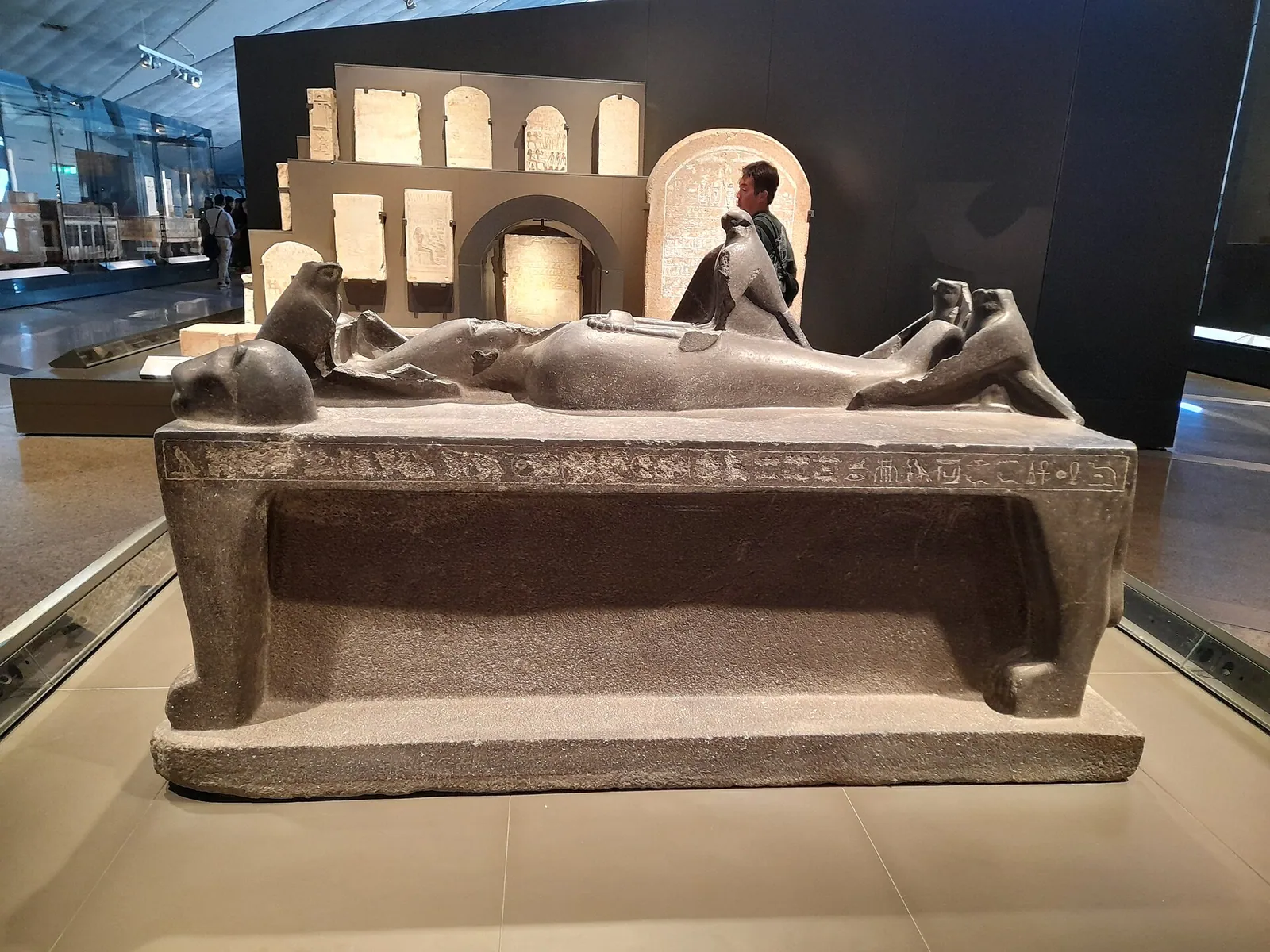
What Does 10 Days in Egypt Actually Cover?
A well-designed 10-day Egypt itinerary splits into three natural acts: two to three days in Cairo, a Nile cruise between Aswan and Luxor (three to four days on the water), and a proper close in Luxor before flying home.
Cairo (Days 1–3)
Three full days in Cairo is not excessive, and most visitors underestimate how much there is. The Giza Plateau alone (the Great Pyramid, the Sphinx, the Solar Boat Museum, the plateau’s sheer scale) fills a good morning; rushing it in two hours means missing it. The Egyptian Museum in Tahrir Square holds over 100,000 artefacts and deserves three hours minimum; the new Grand Egyptian Museum at Giza adds further depth as of 2026. A half-day in Islamic Cairo: the medieval bazaars of Khan el-Khalili, the Citadel, Ibn Tulun mosque, and another in Coptic Cairo (the Hanging Church, the Babylon Fortress) fills the remaining days naturally.
One genuine local tip: the Giza east entrance, close to the Sphinx, draws the bulk of tour coaches between 9am and noon. Arriving at the west plateau entrance before 8am gives you the causeway and the pyramid field almost to yourself, a genuinely different experience.
Aswan and the Nile Cruise (Days 4–7)
Aswan is one of the most quietly beautiful cities in Egypt; the Nubian villages that line the banks, the Philae Temple rising from the reservoir, the colours of the evening market. Abu Simbel, three to four hours south by road, is non-negotiable for many visitors and fits cleanly as a long day trip from Aswan. Most Nile cruise boats depart from the Corniche-side docks in the late afternoon; the three-to-four-day journey north to Luxor includes stops at Kom Ombo and Edfu, both of which reward a proper hour rather than a fifteen-minute coach stop.
Luxor (Days 8–10)
Luxor is, without exaggeration, the world’s greatest open-air museum; the density of pharaonic remains here is unmatched anywhere. The Valley of the Kings opens at 6am, and arriving in that first hour before the large groups appear transforms a crowded attraction into something close to a private audience with history. The West Bank also holds the Mortuary Temple of Hatshepsut and the Colossi of Memnon; on the East Bank, the Karnak complex is so vast that a single morning barely covers the main axis. Two to three days in Luxor is not padding; it is the minimum the place deserves.
Should You Book a Guided Tour or Travel Independently?
Independent travel in Egypt is entirely possible, but it carries more friction than most destinations, and first-time visitors consistently underestimate it. Domestic flight prices fluctuate sharply, Nile cruise cabins on good boats sell out months ahead of peak season, temple entry fees change without much notice, and negotiating local transport fares in Luxor or Aswan from a tourist’s position is rarely the money-saver it appears. A private guided package removes all of that overhead at a predictable cost.
The honest trade-offs:
- Independent travel suits experienced Egypt returnees who know the country, speak some Arabic, or want full flexibility on accommodation. For a first visit, research time often outweighs the savings.
- Group tours bring costs down through shared transport and negotiated hotel rates, but fix you to departure dates and shared schedules; fine if your dates are flexible, limiting if they aren’t.
- Private guided packages cost more than group tours but move at your pace. You can spend an extra hour in a tomb that moves you, or skip an attraction that doesn’t.
Ahmose Travel is an Egyptian tour operator based in Alexandria that arranges these trips directly (no third-party markup) which means any last-minute change (a flight delay, an extra site request) can actually be acted on by a person who is there. The Classic Egypt 10 Days Tour from $1,550 per adult is the flagship private programme; children aged 6–12 travel from $895, and children aged 2–5 from $395. If you want to fold in a Red Sea stay or extend to eleven days, the Discover Egypt 11 Days All-Inclusive (from $1,725 per adult, children 6–12 from $995) builds that in from the outset.
Ready to Plan Your 10 Days in Egypt?
Message us on WhatsApp with your travel dates and group size; we’ll send a full itinerary and availability within a few hours, no commitment required.
When Is the Best Time to Visit Egypt?
October to April is the most comfortable window for the ancient sites, with daytime temperatures in Luxor and Aswan sitting between 22–32 °C and evenings genuinely cool. November and February are peak months, expect fuller boats and slightly higher package prices compared to October or March.
May through August is Egypt’s hot season. Inland temperatures regularly exceed 40 °C in Upper Egypt by early afternoon. The sites open at 6am and experienced guides advise finishing the main outdoor work by noon; it’s manageable with early starts and proper rest, but demanding in a way that surprises visitors who chose summer for the cheaper flights. Cairo and the Mediterranean coast are more forgiving in summer than Luxor or Aswan.
Ramadan changes the rhythm of Egyptian cities in ways many visitors find genuinely memorable (evening atmosphere in particular is extraordinary) but restaurants and some services run on reduced hours. As of 2026, check the Islamic calendar carefully when planning, since dates shift each year.
UK, US, EU, Australian, and Canadian passport holders can obtain a 30-day Egyptian e-visa online before arrival; the process typically takes 24–72 hours and costs around $25. Jordan, Gulf nationals, and several other nationalities receive a free visa on arrival. Always verify the current rules via your government’s official travel advisory before booking, as these details can change.
How Much Should You Budget for Egypt in 2026?
Egypt offers exceptional value compared to most long-haul destinations, but the headline package price and the total cost of a trip are not the same thing, entry fees, tipping, and shopping add up quickly, and being caught out by these extras sours the experience.
| Cost Category | Typical Range (per person) | Notes |
|---|---|---|
| Private tour package (10 days) | From $1,550 per adult | Classic Egypt 10 Days; separate children’s rates available |
| Temple and site entry fees | $60–$120 total across the trip | As of 2026; Tutankhamun’s tomb in Valley of the Kings carries an extra supplement |
| Tipping (guides, drivers, boat crew, hotel) | $50–$90 total | Tipping is culturally important in Egypt; budget for it and have small US dollar bills available |
| Shopping and personal extras | Entirely your choice | Khan el-Khalili in Cairo is irresistible, set a personal budget before you go |
| International flights | Not included in packages | Many visitors fly into Cairo and out of Luxor or vice versa; open-jaw routing often costs no more than a return |
Entry fees above are indicative as of 2026 and are worth confirming closer to travel; the Egyptian government adjusts them periodically. For a full picture of what is and isn’t included in any of our programmes, visit the Egypt packages page or get in touch directly.
Classic Egypt: 10 Days Tour
Adults from $1550 · Children (6-12): $895 | Children (2-5): $395. Real local operator in Alexandria, message us with your dates and group size for an exact quote.
- Discover Egypt: 11 Days All-Inclusive: Adults from $1725
- Cairo, Aswan & Luxor Nile Cruise: 7 Days: Per person from $1685
Frequently Asked Questions
It is enough to see the headline sites (Pyramids, Egyptian Museum, Karnak, Valley of the Kings) but every day is full and there is no room for delay or slow mornings. Most first-time visitors who do seven days wish they had booked ten. If seven days is your hard limit, choose a purpose-built itinerary like the Cairo, Aswan & Luxor Nile Cruise: 7 Days rather than attempting to self-organise the logistics from scratch.
Yes, ten days is the sweet spot for a first visit. You can spend two to three days in Cairo, three to four days on a Nile cruise between Aswan and Luxor, and two full days in Luxor, with a buffer for Abu Simbel or a slower morning. The Classic Egypt 10 Days Tour is built around exactly this structure.
October, November, March, and April offer the best combination of comfortable temperatures and manageable crowds. As of 2026, October is particularly good value; the peak winter season has not yet begun, so prices are lower than December or February. July and August are viable if you start each day before 8am and rest through midday, but inland temperatures regularly exceed 40 °C.
For peak months (November through February), book at least three to four months ahead; quality Nile cruise cabins and experienced private guides fill well in advance. For shoulder season or summer travel, four to six weeks is usually workable, though earlier is always better for choice and price. Message us on WhatsApp with your dates and we will tell you availability straight away.