- A well-planned Egypt and Jordan combined tour runs 12–14 days: enough to cover Cairo, Luxor, Aswan, Amman, Petra, Wadi Rum, and the Dead Sea without rushing.
- The fastest crossing is a direct flight from Cairo to Amman (roughly 1.5 hours flying time); a Red Sea ferry from Nuweiba to Aqaba is the scenic overland alternative.
- October to April is the most comfortable travel window for both countries; summer is feasible with early-morning sightseeing starts before 8 am.
- As of 2026, Egypt issues visas on arrival at major airports; Jordan offers an e-visa for most nationalities, verify entry requirements with your government before booking, as rules change.
- Pricing varies considerably by group size, accommodation tier, and included extras; contact Ahmose Travel directly for a personalised quote rather than relying on generic online estimates.
Egypt Tour Packages: 5 to 11 Days (5–11 days): Per person from $650 · private and small-group itineraries with hotels, guides and transfers.
Why should you combine Egypt and Jordan in one 2026 tour?
Egypt and Jordan hold two of the ancient world’s most extraordinary monuments; the Pyramids of Giza and the rose-red Nabataean city of Petra: within a single, logical two-country journey that eliminates the cost and complexity of two separate long-haul trips. The cultural thread running from pharaonic Egypt through the Arab Levant gives a combined tour real intellectual depth, and the contrast between Egypt’s flat golden desert and Jordan’s dramatic canyon landscapes makes each destination feel sharper by comparison. Practically speaking, both countries have well-established English-language tourism infrastructure and are accustomed to international visitors, which makes the transition between them remarkably smooth.
For travellers who want a single operator to manage both sides of the trip, Ahmose Travel is an Egyptian tour operator based in Alexandria that arranges combined Egypt–Jordan itineraries directly, coordinating with vetted ground partners in Jordan so there is one point of contact throughout rather than two separate agencies to juggle.
How long should an Egypt and Jordan combined tour be?
Twelve to fourteen days is the sweet spot; long enough to see the headline sights in both countries without the feeling that you are sprinting from one transfer to the next. A 10-day trip is workable if you prioritise ruthlessly, typically by dropping either Aswan or Wadi Rum, but most travellers who try this wish they had added at least two more days. Three weeks opens the door to a proper Nile cruise segment in Egypt and a genuinely relaxed pace through the Jordanian desert.
Allocate a minimum of two full days in Cairo and two full days in Petra. The Treasury is only the beginning of Petra; the Monastery (Ad-Deir) trail on a second day reveals a carved facade that actually dwarfs the Treasury in scale and is reached by barely a fraction of one-day visitors.
What does a 14-day Egypt–Jordan itinerary look like day by day?
The route below starts in Cairo, heads south through Luxor and Aswan, then crosses to Jordan and works north through Petra and Wadi Rum before finishing at the Dead Sea and Amman. Most operators follow this direction because Cairo is the primary international entry point for Egypt; the itinerary can be reversed if your outbound flights are more convenient from Amman.
Cairo: Pyramids, Sphinx & the Egyptian Museum
- Arrive Cairo; private airport transfer to your hotel in Giza or Zamalek.
- Day 1: the Giza Plateau: Pyramids, Sphinx, and the Solar Boat Museum. The western-side entrance sees noticeably fewer coaches than the main gate before 9 am; plan your driver to arrive by 7:30 am to get ahead of the first tour groups.
- Day 2: the Egyptian Museum in Tahrir Square (or the Grand Egyptian Museum at Giza, confirm opening-hours availability at the time of booking, as these have been subject to change), then a walk through Khan el-Khalili bazaar at dusk.
Luxor: Karnak, the Valley of the Kings & the West Bank
- Morning flight Cairo to Luxor (roughly one hour); head straight to Karnak Temple: the hypostyle hall is best explored before the main coach groups converge around 10 am.
- Day 4: the West Bank Valley of the Kings (as of 2026, a standard ticket covers three tombs; Tutankhamun’s tomb requires a separate ticket purchased on site), the Temple of Hatshepsut, and the Colossi of Memnon.
Aswan: Philae Temple & a Nubian Village
- Travel from Luxor to Aswan by express train (roughly 3.5 hours) or road.
- Afternoon motorboat across to Philae Temple from the Shellal dock, then a drive past the High Dam at sunset.
- Optional: a boat trip to a traditional Nubian village on Elephantine Island; consistently one of the moments guests say they didn’t expect to enjoy as much as they did.
Abu Simbel (optional) then fly to Amman
- A 4 am convoy departure from Aswan by road reaches Abu Simbel by sunrise; the temples open at 6 am and the site is essentially yours before the day-trip coaches arrive mid-morning. If your schedule doesn’t allow it, this day can be used to extend your Aswan time instead.
- Afternoon flight from Aswan or Cairo to Amman Queen Alia International Airport. Route availability changes seasonally; your operator should confirm the specific connection at the time of booking.
Amman & Jerash
- Day 7: settle into Amman; visit the hilltop Citadel and the Roman Theatre, then explore Rainbow Street for dinner.
- Day 8: day trip north to Jerash, one of the best-preserved Roman cities in the world (approximately 50 km from Amman), before returning to the capital for the night.
Petra: The Treasury, the Monastery & beyond
- Drive south to Petra (roughly 3 hours from Amman). The site opens at 6 am; arriving early beats the midday heat and the main coach rush. Note that the Siq walk from the visitor gate to the Treasury takes around 45 minutes each way, factor this into your day plan.
- Day 9: the classic route, Siq, Treasury, Street of Façades, Royal Tombs.
- Day 10: the Monastery (Ad-Deir) trail (800 steps through the hills) and the High Place of Sacrifice for panoramic views across the valley.
Wadi Rum: Desert camp under the stars
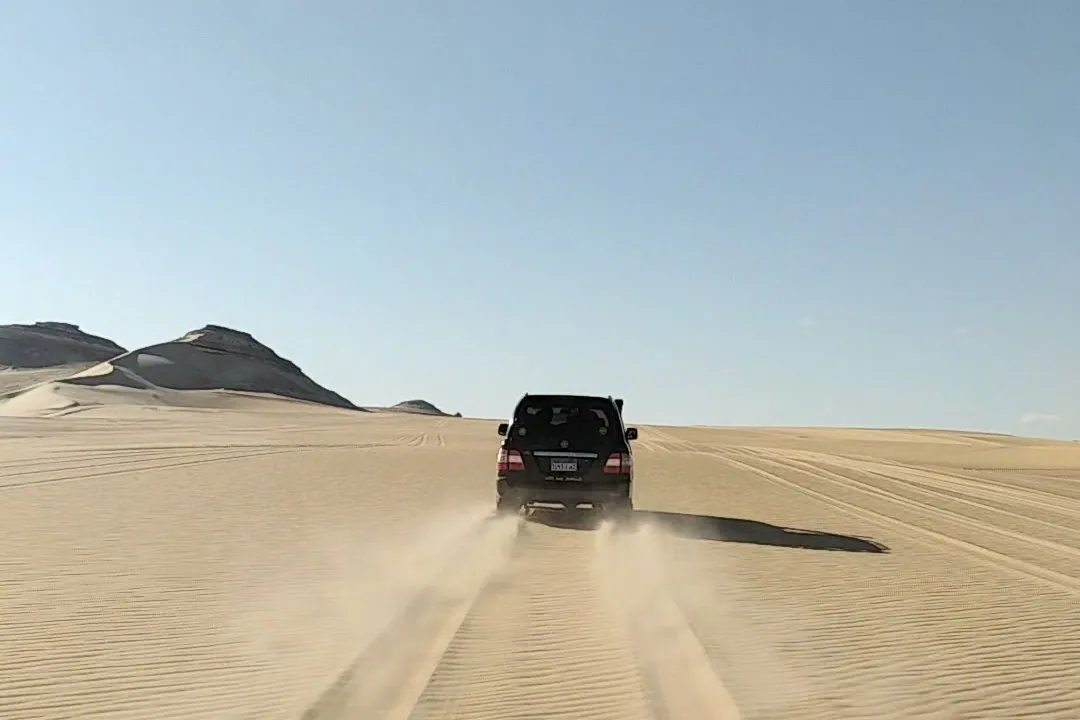
- A 90-minute drive from Petra leads to Wadi Rum, the vast sandstone-and-granite desert that has become famous in part through its role as a film location for several major productions.
- An afternoon 4×4 jeep tour followed by an overnight in a traditional Bedouin camp is the night that guests most often cite as the single experience they would tell a friend not to skip on this itinerary.
The Dead Sea, Madaba & departure from Amman
- Drive north to the Dead Sea (Jordanian shore; the Sweimeh resort strip is the most commonly visited area). At 430 m below sea level (the lowest point on Earth) the salinity makes floating effortless, though bring waterproof sandals and avoid any open cuts before entering the water.
- Day 13: optional visit to Madaba and its 6th-century Byzantine mosaic map church, then transfer to Amman for a final dinner.
- Day 14: depart Amman Queen Alia International Airport.
When is the best time to travel Egypt and Jordan together?
October through April offers the most comfortable conditions across both countries, with mild daytime temperatures and lower risks of extreme heat at the desert sites. Spring (March–April) and autumn (October–November) are the busiest booking windows; if you are targeting these months, reserve accommodation in Petra at least three months in advance, as the better-located hotels fill quickly.
Summer (June–August) is genuinely hot (Petra regularly reaches 38 °C and Wadi Rum higher) but it is workable with early-morning starts and a midday rest. Winter brings cold nights in Jordan that can catch travellers off guard if they have packed only light layers for Egypt. January and February rain can occasionally flood the Siq in Petra and force a site closure on safety grounds; build a buffer day into any winter itinerary to absorb this possibility.
Ready to plan your Egypt and Jordan combined tour for 2026?
Ahmose Travel builds personalised Egypt–Jordan itineraries to match your travel dates, group size, and budget. Message us on WhatsApp for a no-obligation quote; we typically respond within a few hours.
How do you travel between Egypt and Jordan?
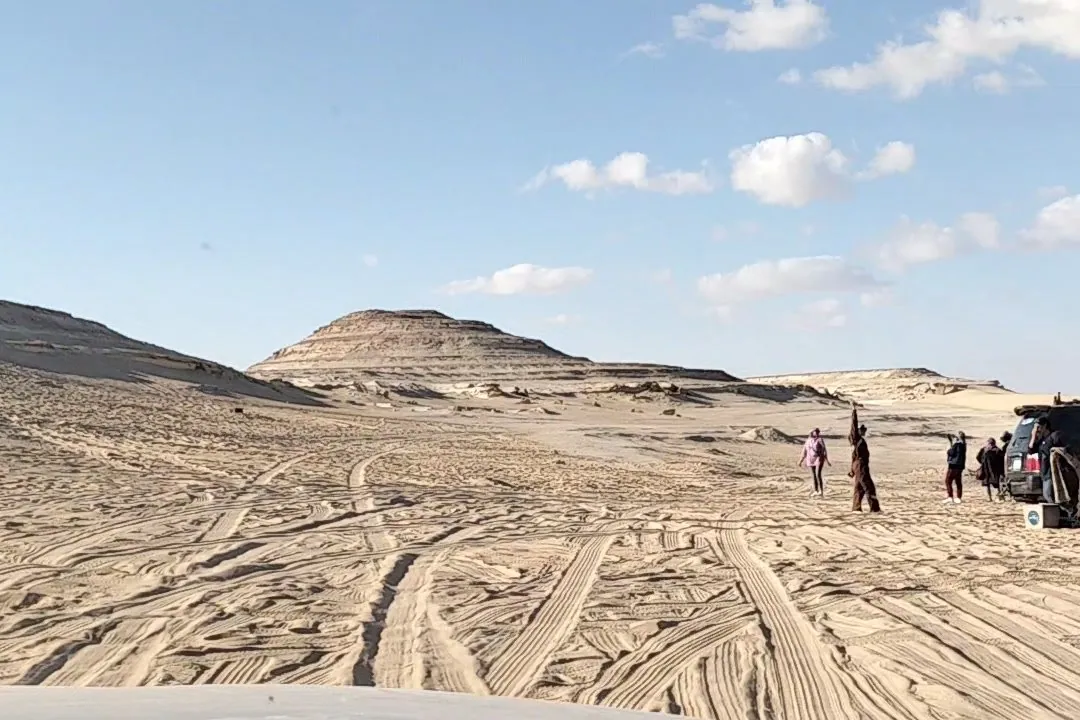
The most reliable crossing between Egypt and Jordan in 2026 is a direct flight, most commonly Cairo to Amman. If your Egyptian itinerary ends in the south, both Sharm el-Sheikh and Luxor have connections to Amman, though frequency varies by season, confirm availability when booking. The alternative is the Red Sea ferry from Nuweiba (Egypt) to Aqaba (Jordan), which suits travellers who want to carry a vehicle or prefer a slower, scenic crossing. Check schedules before travelling as ferry frequency can vary considerably.
| Route | Approx. Journey Time | Notes |
|---|---|---|
| Cairo → Amman (flight) | ~1.5 hrs flying | Most frequent option; multiple carriers as of 2026, check seasonal availability |
| Luxor / Aswan → Amman (flight) | ~2–2.5 hrs | Useful if your Egypt leg ends in the south; connections vary by season |
| Sharm el-Sheikh → Amman (flight) | ~1 hr | Good option if Sinai is part of your Egypt itinerary |
| Nuweiba → Aqaba (fast ferry) | ~1 hr crossing | Scenic Red Sea crossing; schedules vary, check before travelling |
| Nuweiba → Aqaba (car ferry) | 3–4 hrs | Suitable for vehicle transport; less frequent than the fast ferry |
What should you realistically budget for an Egypt–Jordan combined tour?
Budgeting accurately depends on three main variables: your accommodation category, your group size, and which optional extras you include. As a general pattern, Egypt’s per-night hotel costs tend to sit lower than Jordan’s, and the Petra and Dead Sea stretch drives the higher end of the Jordanian accommodation budget. The internal flight or ferry crossing between the two countries is the single largest add-on cost and should be factored in early when comparing quotes from different operators. The Jordan Pass (which bundles the visa fee with entry to Petra and over 40 other sites) can offer good value for stays of three or more nights; verify current pricing and eligibility on the official Jordan Tourism Board website before booking, as terms change.
Rather than publishing a rate that may not reflect your specific travel dates or preferred hotels, we recommend reaching out via the contact page or WhatsApp for a personalised breakdown. Our tour packages page also shows the range of Egypt-side programmes we build, which form the foundation of most combined itineraries, from classic private tours to small-group departures.
Egypt Tour Packages: 5 to 11 Days
Per person from $650 · private and small-group itineraries with hotels, guides and transfers. Real local operator in Alexandria, message us with your dates and group size for an exact quote.
- Discover Egypt: 11 Days All-Inclusive: Adults from $1725
- Classic Egypt: 10 Days Tour: Adults from $1550
Frequently Asked Questions
As of 2026, most nationalities can obtain an Egyptian visa on arrival at Cairo, Luxor, Sharm el-Sheikh, and Aswan airports. Jordan offers an e-visa for most passport holders; the Jordan Pass, which bundles the visa fee with Petra entry and over 40 other sites, can offer better value if you are spending more than three nights in Jordan. Visa rules change, always verify current entry requirements with your country’s foreign affairs ministry before booking.
Yes, but with compromises. A 10-day combined tour typically means choosing between Aswan and Wadi Rum rather than including both, and limiting Petra to a single day, which most travellers find too short given the walking distances involved. It works well for repeat visitors who know exactly what they are prioritising; first-timers generally find 12–14 days significantly more satisfying.
Most combined itineraries start in Egypt because Cairo is a major international hub with more direct long-haul routes from Europe, North America, and Australia. Finishing in Amman also works logistically, as Queen Alia Airport has strong onward connections. That said, if your home flights are more convenient into Amman, starting in Jordan and ending in Egypt is equally valid; the on-the-ground experience is the same either way.
Generally yes. A few sections require planning for younger children: the Petra Siq and Monastery trail involve significant walking on uneven rock, though a horse-and-carriage service runs to the Treasury entrance for those who need it. Wadi Rum’s 4×4 jeep tours are a consistent hit with older children. Egypt’s major sites are broadly accessible. Pacing can be adjusted to keep daily distances manageable; mention your children’s ages when you enquire and we can tailor the schedule accordingly.