- The classic first-timer route runs 4 nights / 5 days between Luxor and Aswan (or the reverse), stopping at six to eight major ancient sites along the way.
- Best travel window as of 2026: October through April: comfortable temperatures, excellent light for photography, and all sites operating at full capacity.
- Cabin grades run from standard (lower deck, porthole window) through deluxe to suite (upper deck, private balcony or floor-to-ceiling windows); the price gap between grades often exceeds the gap between different cruise lines at the same grade.
- Most cruise fares include all meals and Egyptologist-guided shore excursions: always confirm what is included before you pay, as exclusions vary by operator.
- Book with a licensed Egyptian tour operator whose guides hold official Ministry of Tourism accreditation; this is the clearest single sign that your itinerary is both legal and properly staffed.
4-Night Nile Cruise: Luxor → Aswan (5 days): Adults from $495 · Children (6-11): $240 | Full board included.
What exactly is a Nile cruise and is it right for first-time visitors?
A Nile cruise is a floating hotel that sails the stretch of river between Luxor and Aswan, docking at temple sites so you can step ashore for guided visits without ever repacking your bags. For most first-time visitors to Egypt, it is the most time-efficient way to experience Upper Egypt: you cover roughly 200 kilometres of the Nile Valley while sleeping, eating, and relaxing on board, then arrive at each site rested rather than road-weary.
The experience suits a wide range of travellers: couples who want romance on the water, families who need structure and variety, and solo explorers who prefer the convenience of a group-based itinerary. It is not, however, a beach holiday or a city break; the pace is gentle but purposeful, and each day is built around ancient monuments rather than poolside lounging. If you are the kind of traveller who wants to understand a civilisation rather than simply photograph it, a Nile cruise delivers that in a way a land-based tour rarely matches.
Modern cruise ships on the Nile (often called motor cruisers to distinguish them from the traditional sailing dahabiya) typically carry between 30 and 70 cabins. Smaller boutique vessels offer a quieter atmosphere, while larger ships have more facilities, swimming pools, sun decks, and nightly entertainment. Your first decision is not which temples to visit, since those are fixed by geography, but which grade of ship and cabin to choose, and that shapes everything else about your experience.
When is the best time of year to take a Nile cruise in 2026?
The best months for a first-time Nile cruise are October through April, when daytime temperatures in Luxor and Aswan sit comfortably between 20°C and 30°C and the light is ideal for photography at open-air temple complexes. Outside those months, the experience does not disappear, but it changes character significantly.
From May through September, temperatures in Upper Egypt regularly exceed 40°C by mid-morning. Cruise ships still operate, and some travellers actively seek the off-peak rates and quieter docks that come with the summer schedule. If you travel in summer, plan your itinerary around very early-morning visits, before 9 am, when the stone is still cool and the crowds thin. The practical reality of August is that temple courtyards at Karnak are genuinely uncomfortable by 8:30 am, so do not plan to linger.
November and February are the two most popular months for first-timers as of 2026. November offers post-peak rates with near-perfect weather; February sits in the heart of the European half-term travel window and the better ships book out weeks in advance. Late October and early March offer competitive pricing with excellent conditions and fewer peak-season crowds.
The best-reviewed mid-range ships on the Luxor–Aswan route fill their upper-deck suites first, often two to three months before departure during the October–April season. If you have a specific cabin grade in mind, enquire early rather than waiting for a last-minute deal that may leave only lower-deck standard rooms available on your preferred sailing.
How do cabin grades work, and which one should you book?
Cabin grades on Nile cruise ships determine your deck height, room size, window type, and access to outdoor space, and the differences matter more than most first-timers expect when reading a brochure at home.
| Grade | Typical Deck | Window / Access | Space & Features | Best For |
|---|---|---|---|---|
| Standard | Lower (1st or 2nd) | Small porthole or fixed window | Compact twin or double bed, fitted bathroom, limited storage | Budget-conscious travellers who spend most waking hours ashore |
| Deluxe | Middle (2nd or 3rd) | Larger picture window, some openable | More floor space, often a bathtub, improved storage and amenities | Most first-timers wanting comfort without suite pricing |
| Suite | Upper (top deck) | Floor-to-ceiling windows or private balcony | Separate sitting area, premium linen, priority excursion boarding | Honeymooners, those with mobility needs (fewer stairs), longer voyages |
The most consistent advice from returning travellers is to choose at least a deluxe cabin if the budget stretches. The view from a porthole-level standard cabin when sailing past the Esna Lock, or anchored opposite the limestone cliffs above the Valley of the Kings; is dramatically less rewarding than the same moment from a picture window three metres higher. That said, you spend the majority of your waking hours on deck or ashore, so a standard cabin on a ship with excellent communal facilities genuinely outperforms a suite on a vessel with poor shared spaces.
Price gaps between grades vary considerably by season, ship, and operator. For current figures, contact your tour operator directly rather than relying on published rack rates, which rarely reflect actual availability at the time of booking. The team at Ahmose Travel can confirm exactly what is available on specific sailings and what each grade includes on that particular ship.
What does a typical day on board actually look like?
Most days on a 4-night Nile cruise follow a gentle but structured rhythm: an early-morning excursion while the temperature is still manageable, a return to the ship for a buffet lunch as the vessel sails to the next mooring, and a second site visit in the late afternoon when the light turns golden and the coach-tour groups have retreated.
Breakfast is typically served from around 7 am, and the first coach to the site departs between 7:30 and 8:30 am. This timing is deliberate; the great temple complexes are dramatically more comfortable before the hotel-based day-trip groups arrive. Karnak Temple, for instance, sees its heaviest foot traffic between 9 am and noon; arriving at 8 am means you have the hypostyle hall largely to yourself for at least part of the visit.
Evenings on board typically include an optional galabiya party, where passengers are invited to wear a traditional Egyptian robe, or a folklore show, or a presentation by the Egyptologist on the following day’s sites. These events are entirely optional and vary by ship; some vessels have a proper theatre space; others use the main dining room. The sun deck is usually the quietest spot after dinner, and sailing past the illuminated embankments of Aswan at night is one of those moments that first-timers consistently describe as unexpectedly moving.
Which temples and sites does the classic Luxor–Aswan route cover?
The classic 4-night route covers six to eight major monuments spanning roughly 3,500 years of Egyptian history, a more concentrated density of ancient heritage per kilometre than almost anywhere else on Earth.
Starting from Luxor (ancient Thebes), the itinerary typically includes Karnak Temple Complex: the largest ancient religious site ever built · and Luxor Temple, which sits dramatically in the centre of the modern city. A half-day excursion to the West Bank covers the Valley of the Kings, where over 60 royal tombs are cut into the limestone cliffs, alongside the Mortuary Temple of Hatshepsut at Deir el-Bahari and the Colossi of Memnon. Check before travelling, as the specific tombs open to visitors rotate, and entry to certain chambers (including Tutankhamun’s tomb) requires a separate ticket as of 2026.
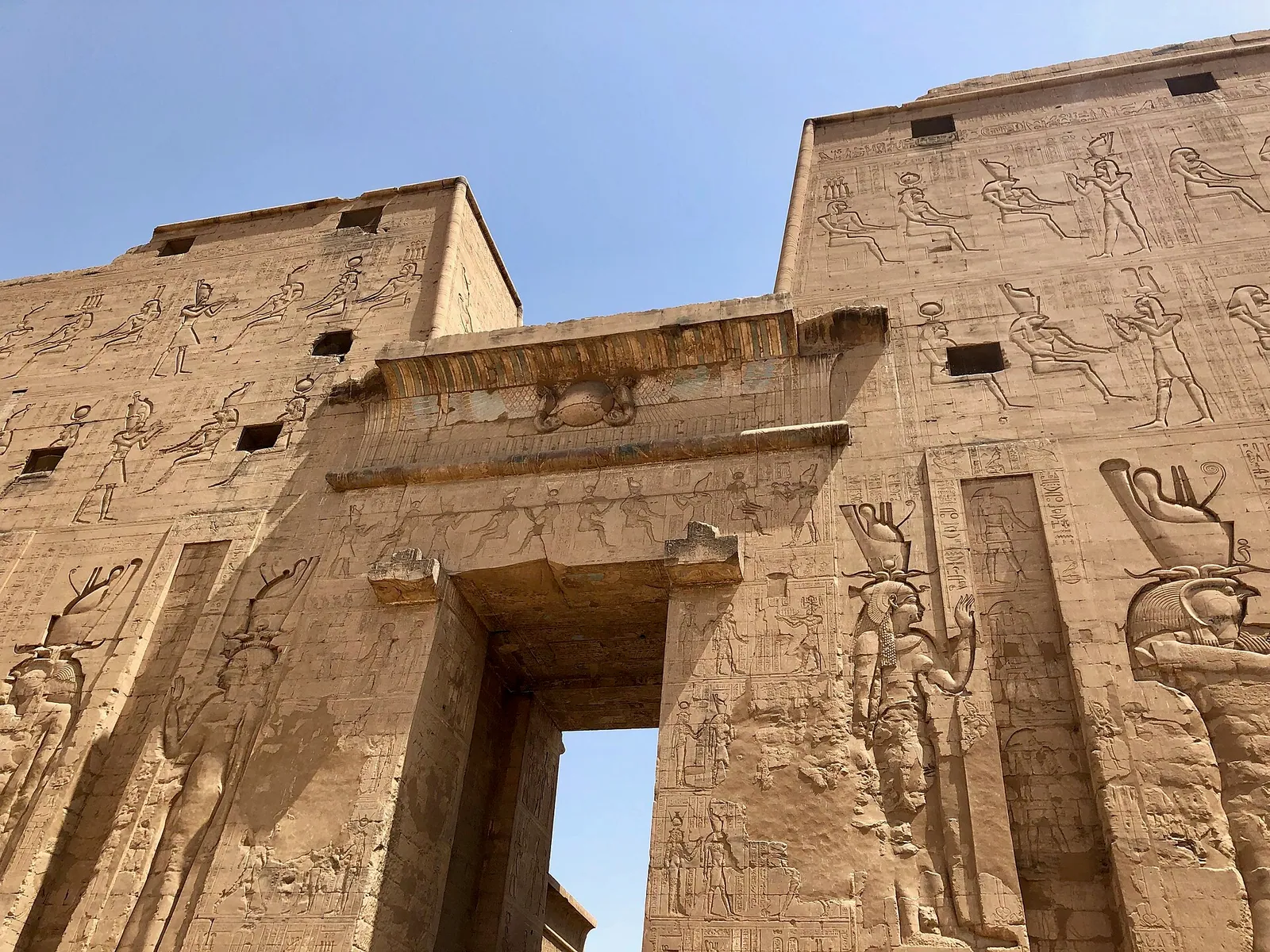
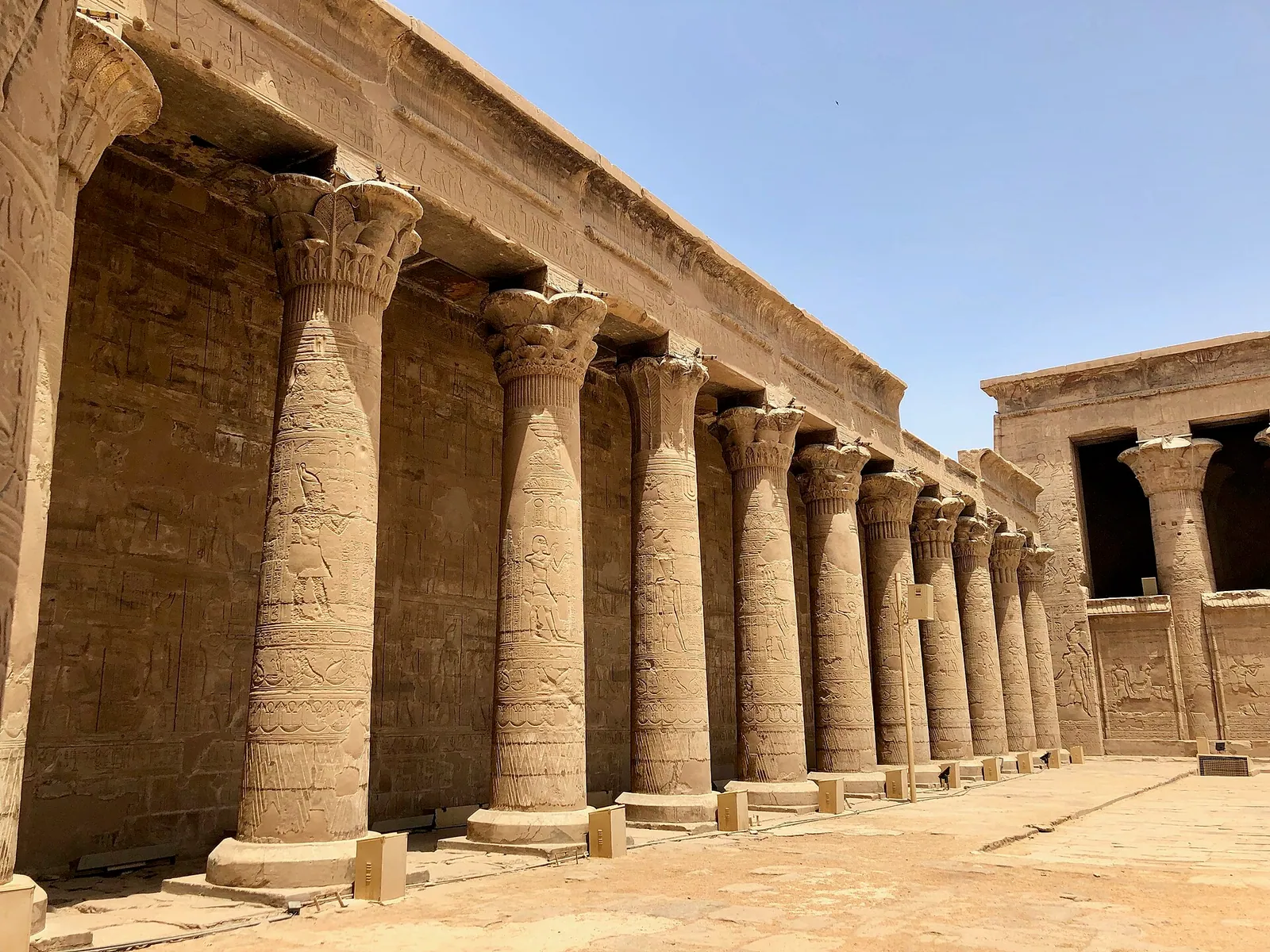
Sailing south, most ships stop at Edfu, home to the best-preserved Ptolemaic temple in Egypt, and Kom Ombo, a twin-deity temple perched right on the riverbank. The view from the ship as you approach Kom Ombo at dusk is one of the route’s genuine highlights; the temple seems to grow out of the water itself. The journey ends at Aswan, where excursions include Philae Temple (reached by motorboat across the reservoir), the Aswan High Dam, and the ancient granite quarry containing the Unfinished Obelisk. Many travellers extend their stay with a day trip to Abu Simbel, roughly 280 kilometres further south, a two-hour drive or short flight that most guides consider the single most spectacular ancient site in Egypt. See our Aswan tours page for Abu Simbel day-trip options from the cruise endpoint.
Ready to plan your first Nile cruise?
Ahmose Travel is an Egyptian tour operator based in Alexandria that arranges Nile cruises directly; we handle the ship booking, accredited Egyptologist guide, airport transfers, and every temple entrance ticket as one package. Send us your preferred dates and cabin grade and we will confirm current availability within a few hours.
What practical tips do first-timers always wish they had known before boarding?
The most useful Nile cruise advice rarely appears in a headline brochure; it comes from guides and from returning travellers who learned it the hard way.
Tipping culture: Tipping is standard and important in Egypt, and a Nile cruise involves more regular staff interactions than a hotel stay. Your cabin steward, the dining team, coach drivers, temple guides, and the captain of any optional felucca sail all appreciate a small daily gratuity. Keep a supply of small-denomination Egyptian pounds for this purpose; as of 2026 the local currency is the Egyptian pound; US dollars and euros are accepted by many staff, but the effective exchange rate will be less favourable than using local currency. Ask your operator before departure for a suggested daily tip range; most are happy to advise.
What to pack: The dress code on board is relaxed, lightweight breathable fabrics for daytime excursions, something slightly smarter for dinner. Covered shoulders and knees are required inside all temples; a thin scarf or lightweight trousers pack flat and solve the problem without adding weight. River sun is intense even in December: a wide-brimmed hat, high-factor sunscreen, and polarised sunglasses are essential rather than optional.
Connectivity: Wi-Fi is available on most mid-range and premium cruise ships as of 2026, but signal quality varies when the vessel is mid-river or passing through the Esna Lock. Do not rely on a strong connection for calls or video work; treat any connectivity as a bonus. An Egyptian SIM card (available at Cairo Airport and easy to top up in Luxor and Aswan) can supplement ship Wi-Fi and often delivers better speeds when you are ashore at temple sites.
Health and medication: Bring any prescription medication in adequate supply. Pharmacies in Luxor and Aswan stock common over-the-counter items, but the stretches between towns have limited access to anything. Motion sickness is rarely an issue on the Nile (the current is slow and the water is calm) but anti-nausea tablets are worth packing if you are prone to sensitivity. Check current UK, EU, or US travel health guidance before departure, as vaccination and health recommendations do change; verify with your GP or a travel clinic rather than relying on any website, including this one.
How do you choose a trustworthy Nile cruise operator in 2026?
The safest approach is to book through a licensed Egyptian tour operator whose Egyptologist guides hold official Ministry of Tourism accreditation; this is the clearest single indicator that your itinerary is both legal and properly staffed, and it protects you if a temple closes unexpectedly or an itinerary adjustment is needed mid-sailing.
Questions worth asking before you commit: Does the quoted price include all temple entrance fees, or are some paid separately on arrival? Is the guide’s Ministry of Tourism badge verifiable? What is the cancellation and amendment policy in writing? Does the operator handle airport transfers, or is that a separate arrangement? If you are flying into Cairo first, does the package include the domestic connection to Luxor, or does it assume you are already there?
Many first-timers combine a Nile cruise with two or three nights in Cairo; the standard sequence is Cairo first (pyramids, the Grand Egyptian Museum, Islamic Cairo), then a domestic flight to Luxor to join the cruise. Domestic flights between Cairo and Luxor take around an hour and operate multiple times daily. Our Cairo tours page covers the most popular pre-cruise city itineraries, and our Egypt packages include combined Cairo and Nile cruise options at a range of budgets. If you want to check availability for specific dates or get a current quote for a particular cabin grade and ship, the fastest route is a WhatsApp message; we typically reply within a few hours.
4-Night Nile Cruise: Luxor → Aswan
Adults from $495 · Children (6-11): $240 | Full board included. Real local operator in Alexandria, message us with your dates and group size for an exact quote.
- Discover Egypt: 11 Days All-Inclusive: Adults from $1725
- Classic Egypt: 10 Days Tour: Adults from $1550
Frequently Asked Questions
Yes; most Nile cruises are well suited to families with children aged around six and above. The structured daily routine, the drama of the temple sites, and the novelty of sleeping on a moving boat tend to engage children very effectively. The main consideration is heat: if you travel during peak summer, plan excursions around the earliest-morning departure slots and build in afternoon rest time on board. Families with infants or toddlers should discuss on-shore terrain and ship facilities with their operator before booking, as some sites involve uneven ground and long walking distances.
Most nationalities require a tourist visa to enter Egypt, which as of 2026 can be obtained via Egypt’s official e-visa portal before travel, or on arrival at major international airports including Cairo, Luxor, and Aswan. Your standard tourist visa covers the Nile cruise itself; no separate cruise permit is required for passengers. Visa requirements do change, so verify the current rules for your specific nationality before booking; your tour operator can guide you through the process, but the authoritative source is the Egyptian Ministry of Foreign Affairs or your country’s official travel advisory.
Absolutely; the Cairo plus Nile cruise combination is the most popular Egypt itinerary for first-time visitors. The standard approach is two to three nights in Cairo covering the Giza Pyramids, the Grand Egyptian Museum, and a walk through Islamic Cairo, followed by a domestic flight to Luxor to join the cruise. Flights between Cairo and Luxor take around an hour and operate multiple times daily on EgyptAir and other carriers. Ahmose Travel offers combined packages that bundle the flight, Cairo hotel, and cruise booking, see our packages page or ask via WhatsApp for current availability and pricing.
Most mid-range and premium cruise ships offer Wi-Fi as of 2026, but connection quality is inconsistent; typically strongest when the ship is docked at a city port such as Luxor or Aswan, and weakest when mid-river or transiting the Esna Lock. Treat onboard connectivity as a convenience rather than a reliable working environment, and download any essential documents, offline maps, or entertainment before you board. An Egyptian SIM card with a local data plan (available at Cairo Airport and easy to top up in Luxor) can supplement ship Wi-Fi and often provides better speeds when you are ashore at temple sites.