- Three days in Cairo covers four distinct eras of civilisation: the Giza Pyramids and Sphinx, a major Egyptian museum, the medieval Islamic Old City, and the ancient necropolis of Saqqara: all without feeling rushed.
- The best months for a 2026 Cairo visit are October through April; summer midday temperatures regularly exceed 40 °C, which turns outdoor monuments into endurance tests by mid-morning.
- Admission fees and visa-on-arrival eligibility change regularly, verify current figures on official Egyptian Tourism Authority channels before you travel, as all fees noted here are subject to update in 2026.
- A licensed Egyptologist guide for the Giza plateau and museum morning saves at least an hour of queue confusion and transforms the experience from a blur of stone into a coherent story.
- Ahmose Travel, an Egyptian tour operator based in Alexandria, arranges private Cairo itineraries, airport transfers, and full Egypt packages, contact via WhatsApp or browse our Cairo tours page.
Cairo 8 Days / 7 Nights Private Tour (8 days): Private, from $650 · per person for a solo private tour · less per person for couples and groups.
Is Three Days in Cairo Enough to See the Highlights?
Yes, three focused days give you an honest, unhurried look at Cairo’s greatest sites, provided you plan each day around a single geographical cluster rather than criss-crossing the city. Cairo is one of the world’s most layered capitals: it sprawls across both banks of the Nile, traffic is legendary, and the density of history, Pharaonic, Coptic, Islamic, Ottoman, means that trying to see everything leads to seeing nothing properly. A well-designed Egypt 3-day Cairo itinerary for 2026 picks one great theme per day and honours it at a human pace.
The three themes that reward this approach most consistently are: the Giza plateau paired with a major Egyptian museum; the medieval Islamic quarter with its citadel, mosques, and living alleyways; and the step-pyramid field at Saqqara combined with the open-air ruins of ancient Memphis. Together they span roughly 4,400 years of continuous civilisation (from Egypt’s first stone monument to its Ottoman skyline) in 72 hours.
What Does Your Day-by-Day Cairo Itinerary Look Like?
Each day below is built around a single geographical cluster so that you spend time at the sites rather than in Cairo’s infamous traffic. Morning starts are essential, aim to be at the gates by 8 am at the latest, as both tour groups and heat build quickly after 10 am.
The Giza Plateau and the Grand Egyptian Museum
- Early morning (8 am): Arrive at the Giza Plateau before the bulk of tour coaches. The panorama viewpoint on the south approach gives a full three-pyramid silhouette that the main east entrance cannot match. Allow two to three hours: the exterior circuit of all three pyramids, the Sphinx enclosure, and, if you want the interior of the Great Pyramid of Khufu, note that interior access is sold as a separate, limited-batch ticket, buy it at the gate on arrival or pre-arrange through your operator.
- Late morning: Transfer to the Grand Egyptian Museum (GEM), which sits on the desert edge just minutes from the plateau. The GEM holds the complete Tutankhamun collection alongside tens of thousands of artefacts previously in storage. Allow at least two and a half hours; the galleries are enormous and the air conditioning, after the plateau heat, is a genuine pleasure.
- Afternoon: Return to your hotel to rest. Save your energy, Day 2 involves sustained walking on uneven cobblestones.
- Evening: Dinner at a rooftop restaurant with a Nile view. Cairo’s skyline lit at dusk, minarets rising above the haze, is one of the city’s quieter rewards.
Islamic Cairo: Citadel, Al-Azhar, and the Medieval Streets
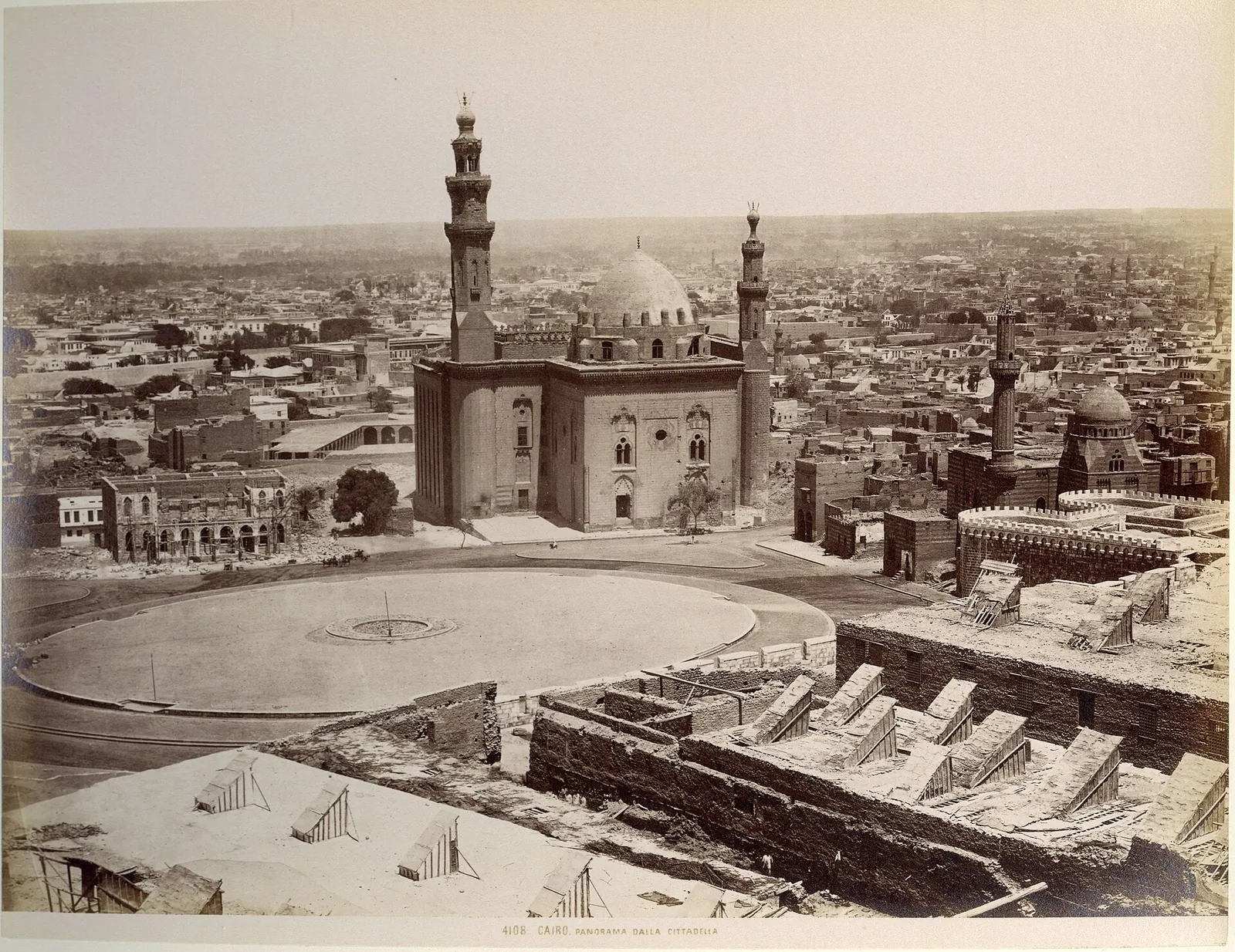
- Morning (8:30 am): Begin at the Citadel of Saladin, the 12th-century fortress on the Mokattam Hills that commanded Cairo’s skyline for seven centuries. Inside the walls, the Mosque of Mohammed Ali is breathtaking, its alabaster interior is lit by hundreds of lanterns, and the courtyard offers a sweeping panorama across the entire city.
- Mid-morning: Descend to Al-Muizz Street, the preserved spine of the Fatimid city. This single medieval thoroughfare packs in ornate madrasa facades, 10th-century gates (Bab al-Futuh and Bab al-Nasr), and a caravanserai or two within easy walking distance of each other.
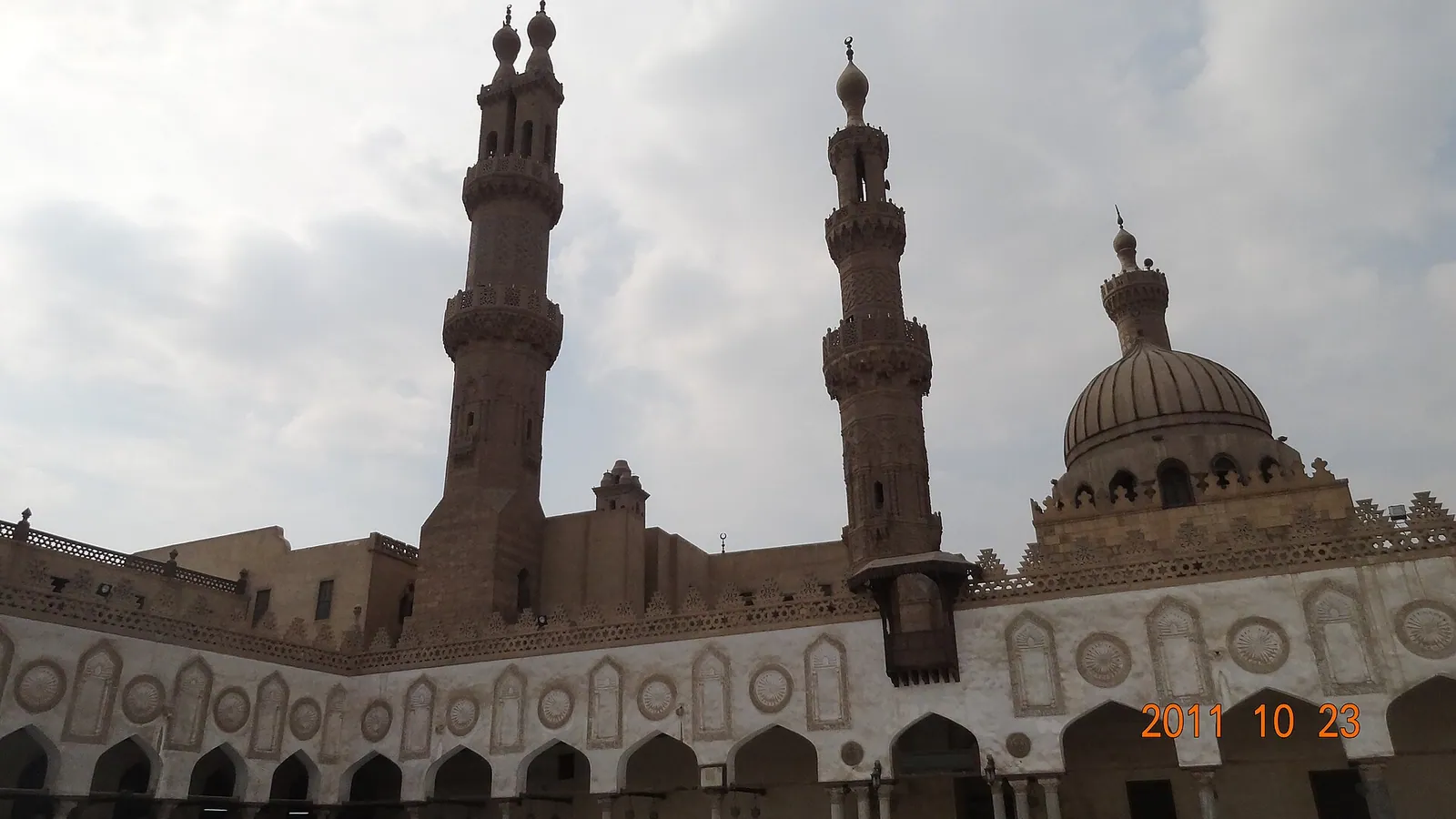
- Midday: Visit Al-Azhar Mosque, one of the world’s oldest functioning universities, founded in 970 CE. Non-Muslim visitors are welcome outside prayer times; modest dress is required, and abayas are available at the entrance if needed.
- Afternoon: The lanes around Al-Azhar spill naturally into the bazaar district, a good place to browse spices, silverwork, and papyrus at your own pace before heading back.
- Evening: A street-level dinner of kushari or grilled kofta in this neighbourhood costs a fraction of hotel dining and tastes considerably better.
Saqqara and Memphis: Egypt’s Oldest Monuments
- Early morning (7:30 am): Leave for Saqqara while the city is still quiet. The drive is roughly 30 km south of central Cairo, allow 45 minutes to an hour depending on traffic, which is typically lighter heading out of the city. The Step Pyramid of Djoser (circa 2650 BCE) is the world’s oldest large-scale stone monument, and after recent restoration work it is more accessible than it has been in decades. The surrounding necropolis contains mastaba tombs with intact painted reliefs that receive a fraction of the attention they deserve.
- Mid-morning: The Imhotep Museum at Saqqara is a compact, excellent collection contextualising the architect behind the Step Pyramid. It draws far fewer visitors than the Egyptian Museum, and you can take your time with each case.
- Late morning: Drive 5 km further to Mit Rahina for the open-air museum of ancient Memphis, Egypt’s first capital. The colossal recumbent statue of Ramesses II and the alabaster sphinx on site are iconic; the whole stop takes around 45 minutes.
- Afternoon: Return to Cairo with time for last-minute shopping, a final Nile promenade, or a relaxed transfer to the airport if you have an evening flight.
How Do You Get Around Cairo Efficiently on This Itinerary?
Getting around Cairo efficiently is the single biggest variable that separates a frustrating visit from a smooth one; the distances are manageable but the traffic is not, and no two days feel the same.
| Transport Option | Best Used For | Practical Notes |
|---|---|---|
| Private driver (full day) | Giza + GEM day; Saqqara + Memphis day | Prearranged, waits at each site, no metered surprises. Book through Ahmose Travel or your hotel concierge. |
| Careem / Uber | In-city hops (Citadel to Al-Azhar) | Both apps function well in Cairo as of 2026; card payment avoids small-change friction. Expect surge pricing during morning and evening rush. |
| Cairo Metro | Budget travellers; limited routes | Clean, air-conditioned, and inexpensive. Useful for Tahrir to Maadi corridor; does not reach Giza plateau or Saqqara directly. |
| Hotel taxi | Airport transfers | Usually pricier than ride-share apps but reliable for early-morning flights. Negotiate the fare before you get in. |
For the Saqqara day, a private driver is strongly recommended; there is no practical public transport to the site, and an unmetered taxi negotiated at the roadside can turn the return journey into an unwanted haggling exercise. Arranging private transport in advance means the entire day runs on your schedule, not the driver’s.
What Is the Best Time to Visit Cairo in 2026?
October through April is the best window for a Cairo visit in 2026, with October–November and March being the most reliably comfortable months for outdoor monuments. Here is what each season genuinely feels like on the ground:
October–November: Ideal. Daytime temperatures hover in the low-to-mid twenties (°C), skies are clear, and post-summer visitor numbers at the major sites drop noticeably. This is the window Ahmose Travel recommends most consistently for first-time visitors.
December–February: Pleasantly cool to mildly chilly, especially in the early mornings at Saqqara. The Christmas and New Year period is significantly busier than the rest of winter; book accommodation and guides well in advance if travelling then.
March–April: Warm and beautiful, but watch for khamaseen dust storms in late March and April, which can reduce visibility at Giza to near zero on a bad day. Check the forecast the evening before your Giza morning.
May–September: Summer heat in Cairo is genuine, midday temperatures regularly exceed 38–40 °C in July and August. The plateau and Saqqara become endurance exercises rather than pleasures. If summer is your only option, start no later than 7 am and plan to be indoors by noon.
Ready to Build Your Cairo Itinerary?
Ahmose Travel is an Egyptian tour operator based in Alexandria that arranges private Cairo tours, airport transfers, and full Egypt packages directly, no middlemen, no inflated booking fees. Message us on WhatsApp with your travel dates and group size and we will put together a detailed, itemised itinerary built around your pace.
What Should You Know Before You Arrive in Cairo?
A handful of practical details separate a smooth first visit from an avoidable headache; most of them are simple once you know them.
Dress code: Islamic Cairo requires covered shoulders and knees for both men and women entering mosques. Lightweight linen trousers and a long-sleeve shirt work year-round in winter and spring; carry a scarf rather than relying on the ones available at mosque entrances.
Cash vs. card (as of 2026): Many heritage sites, local restaurants, and bazaar stalls remain predominantly cash-based. ATMs in Zamalek, Mohandeseen, and near major hotels are reliable; airport exchange desks typically offer poor rates. Carry a mix of Egyptian pounds and a backup card, and verify ATM availability with your hotel on arrival.
Egypt’s heritage site admission fees are set by the Supreme Council of Antiquities and have increased several times in recent years. Do not rely on prices quoted on travel forums from two or three years ago, verify current fees at official ticketing windows or through your guide before each site. At Giza, interior pyramid access is sold separately from the main plateau ticket and is limited to a set number of visitors per day; if entering the pyramid matters to you, arrive at the gate early or arrange this through your tour operator in advance.
Photography (as of 2026): General photography for personal use is included in most site entry fees, but tripods and professional video equipment typically require a separate permit and advance approval. Check before packing heavy gear.
Extending beyond Cairo: Three days will leave most visitors wanting more. A one-hour domestic flight connects Cairo to Luxor or Aswan; adding four to five days opens up the Valley of the Kings, Karnak Temple, and Abu Simbel. Our full Egypt packages combine Cairo with a Nile cruise or a southern circuit, browse them or ask us to build something custom.
How Much Should You Budget for a 3-Day Cairo Trip in 2026?
Cairo is significantly more affordable than Western European cities at a comparable standard of experience, though costs vary widely depending on your accommodation tier, guide arrangements, and how you handle meals.
Accommodation ranges from budget hostels in downtown Cairo to five-star Nile-view hotels; mid-range hotels in Zamalek or near the Giza plateau typically offer the best balance of comfort and access for a three-day itinerary. Meals at local street-level restaurants are very inexpensive; tourist-facing restaurants in the bazaar area and hotel dining rooms cost considerably more.
For entry fees, private guide rates, and transport across all three days, the clearest route is to request an itemised quote; what you pay per person depends on group size, travel season, and exactly which optional extras (pyramid interior, Saqqara photography permit, GEM timed entry) you want included. Message Ahmose Travel via WhatsApp with your dates and we will give you a straight, no-surprise number. You can also read wider context on trip costs in our travel blog.
Cairo 8 Days / 7 Nights Private Tour
Private, from $650 · per person for a solo private tour · less per person for couples and groups. Real local operator in Alexandria, message us with your dates and group size for an exact quote.
- Saqqara, Dahshur & Memphis: Private, from $247
- Fayoum: Wadi El Rayan & Wadi Al Hitan 4×4: Price from $187.50
Frequently Asked Questions
Yes, and it works particularly well when you pair the Giza plateau with the Grand Egyptian Museum (GEM), which is just a few minutes’ drive from the plateau. Arrive at Giza before 8 am, spend two to three hours on the plateau, then cross to the GEM for the late morning and early afternoon. The original Egyptian Museum in Tahrir Square is further away (roughly 20–30 minutes in normal traffic) and is better saved for a dedicated half-day if your schedule allows an extra day in the city.
Most nationalities can obtain a visa on arrival at Cairo International Airport or apply for an e-visa online before travelling, as of 2026, the e-visa system is straightforward and supports both single and multiple entry. Visa rules and eligible nationalities do change, so always check the official Egyptian e-visa portal or your government’s current travel advisory before booking flights. Never rely solely on forum posts or older blog articles for visa information.
The main tourist areas of Cairo, the Giza plateau, Islamic Cairo, Zamalek island, and the downtown Tahrir district, are well-policed and see millions of international visitors each year. The most common inconvenience is persistent unsolicited attention from vendors and unofficial guides near the major monuments; a polite but firm response and walking with purpose is generally enough. As with any large city, stay alert in unfamiliar neighbourhoods after dark. Check your government’s current travel advisory before departing, these are updated regularly and give the most current picture.
Absolutely, and most first-time visitors to Egypt do exactly this. A one-hour domestic flight connects Cairo to Luxor or Aswan; alternatively, an overnight sleeper train is a classic Egyptian experience that saves a night’s accommodation cost. Adding four to five days opens up the Valley of the Kings, Karnak Temple, and Abu Simbel. Browse our Egypt tour packages for combined Cairo–Luxor–Aswan itineraries built around a Nile cruise, or message us on WhatsApp to design something around your specific dates and interests.